

A steady flow of qualified leads does not always require cold calls, purchased lists, or constant ad spending. Inbound lead generation attracts prospects while they are actively looking for solutions.
For local businesses, this matters because search behavior often starts with research. Recent BrightLocal research found that 84% of US consumers searched for a local business within the previous three months.
Inbound lead generation brings together channels such as Local SEO, content marketing, landing pages, email, social media, and useful resources. The goal is to turn relevant attention into identifiable prospects and sales opportunities.
What Is Inbound Lead Generation?
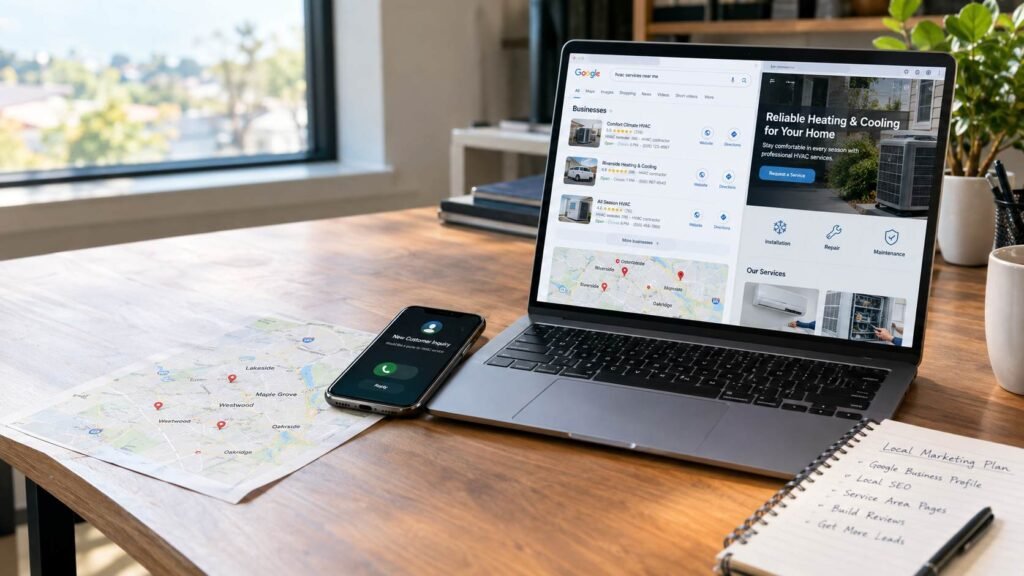
Inbound lead generation is the process of attracting potential customers through useful content, search visibility, local marketing, social media, and other channels, then converting their interest into a lead.
Instead of approaching people who may have no current need, inbound marketing puts your business in front of prospects who are already researching a problem, service, product, or provider.
A visitor can become an inbound lead after taking an action such as submitting a form, requesting a quote, booking an appointment, calling a business, downloading a resource, or subscribing to an email list.
For a local service business, an inbound lead might look like a homeowner searching for “emergency plumber near me,” finding a service page, checking reviews, and requesting a quote.
The basic process is:
- Attract relevant prospects
- Provide information that matches their intent
- Give them a clear conversion path
- Capture and qualify their information
- Nurture the prospect until they are ready to buy
The important distinction is intent. Inbound lead generation works by creating visibility before the sales conversation begins.
Why Is Inbound Lead Generation Important?
Inbound lead generation can create a repeatable path from search or content discovery to inquiry. It also gives businesses more opportunities to reach prospects at different stages of the buying process.
For local businesses, the connection between online research and lead generation is particularly important. BrightLocal found that only 6% of local searchers simply clicked the top result.
Factors such as proximity, ratings, review count, complete business information, pricing, photos, and service category also influenced research decisions.
This means ranking alone is not enough. A local business needs useful information and a clear reason for the visitor to take the next step.
An effective inbound system can support:
- Organic traffic from search engines
- Local visibility through Google Business Profile
- Qualified website inquiries
- Phone calls and appointment requests
- Email subscribers and remarketing audiences
- Lead nurturing after the initial inquiry
How Does Inbound Lead Generation Work?
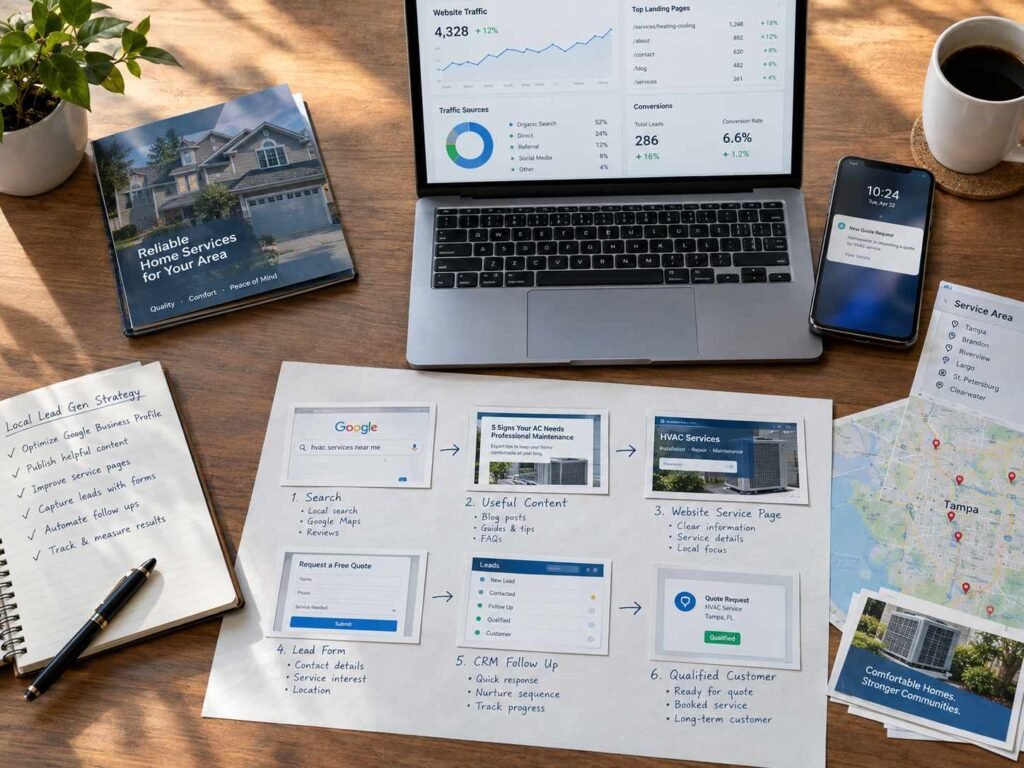
Inbound lead generation generally follows a sequence from attracting the right audience to converting and nurturing interested prospects.
1. Identify Search and Customer Intent
Start by identifying what potential customers actually search for.
A roofing company might target searches around roof replacement, storm damage, roof inspections, and repair costs. An HVAC company could target AC repair, furnace replacement, maintenance, and emergency service searches.
The objective is not to create content around every possible keyword. It is to identify searches connected to genuine customer problems and buying decisions.
2. Create Content That Answers Those Searches
The next step is publishing useful information that matches the identified intent.
Common inbound assets include:
- Service pages
- Location pages
- Blog articles
- Buying guides
- Case studies
- Checklists
- Calculators
- FAQs
- Videos
- Comparison pages
A plumbing company, for example, could publish an article explaining what homeowners should check before calling an emergency plumber. The article can then guide readers toward the relevant emergency plumbing service page.
3. Convert Visitors Into Leads
Traffic becomes valuable when visitors have an obvious next action.
A conversion path could include a quote form, phone number, booking system, consultation request, downloadable guide, or free assessment.
Landing pages are particularly useful when the visitor arrives with a specific intent. A roofing company running Google Ads for roof replacement, for instance, can send those visitors to a dedicated roof replacement landing page rather than a generic homepage.
Leads Crawler’s existing guide on [lead generation landing pages] covers the role of landing pages, lead magnets, forms, and conversion-focused page elements in greater detail.
4. Qualify and Nurture the Lead
Not every inbound lead is ready to buy immediately.
A visitor requesting an emergency plumbing appointment has different intent from someone downloading a guide about plumbing maintenance.
Businesses can use lead qualification questions, email follow-ups, calls, CRM workflows, and educational content to move prospects toward a buying decision.
Inbound Lead Generation Strategies For Local Businesses
Local businesses can build inbound lead generation around several channels. The right mix depends on the service, location, customer journey, and available resources.
Local SEO and Google Business Profile
Local SEO helps businesses appear when customers search for services in specific areas.
A local strategy can include service pages, location pages, local keyword targeting, citation management, reviews, internal linking, and Google Business Profile optimization.
The Google Business Profile is particularly useful for businesses that depend on calls, directions, bookings, and local discovery.
Leads Crawler provides managed SEO services for local businesses struggling to generate organic leads and losing customers to competitors. Book your growth call today to grab the 3-Pack in 90 days.
Service and Location Pages
A well-structured website should make it easy for searchers to find the exact service they need.
A roofing company serving multiple cities might create relevant pages for roof replacement, roof repair, storm damage, and inspections alongside properly targeted location pages.
These pages should contain useful local information rather than simply replacing a city name throughout the same template.
Content Marketing
Content can attract prospects before they are ready to contact a business.
For example, a remodeling contractor could publish:
- Kitchen remodeling cost factors
- Questions to ask before hiring a contractor
- Permit considerations for remodeling
- Remodeling material comparisons
- Project planning checklists
Each article can connect naturally to a relevant service page when the reader reaches a point where professional help becomes appropriate.
Lead Magnets and Free Resources
A lead magnet gives visitors a practical reason to exchange contact information.
Examples include a roof inspection checklist, HVAC maintenance checklist, home renovation planning worksheet, or local service cost calculator.
The resource should solve a specific problem. A generic PDF with little practical value is unlikely to create strong buying intent.
Social Media and Video Content
Social media can support inbound lead generation by distributing useful content beyond search engines.
A home service company could publish project walkthroughs, maintenance tips, before-and-after examples, customer questions, and short educational videos.
The objective is not simply to collect followers. Social content should create a path toward the website, service page, booking form, phone call, or other relevant conversion point.
Inbound vs Outbound Lead Generation
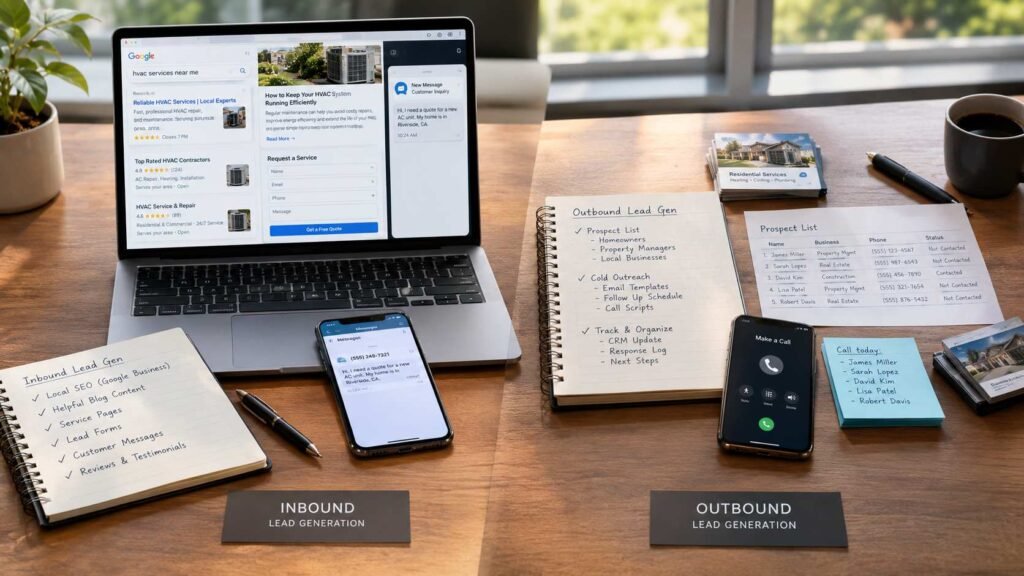
Inbound and outbound lead generation differ mainly in how prospects are reached. Inbound attracts prospects through channels where they can discover the business while researching a need.
Outbound involves proactively reaching potential customers through channels such as cold email, cold calling, direct outreach, or targeted advertising.
| Factor | Inbound Lead Generation | Outbound Lead Generation |
| Primary approach | Attract interested prospects | Proactively contact prospects |
| Common channels | SEO, content, local search, email, social media | Cold email, cold calling, direct outreach |
| Timing | Often reaches prospects during research | Can reach prospects before active research |
| Main asset | Content and conversion paths | Prospect lists and outreach campaigns |
| Lead intent | Often linked to an existing search or interaction | Varies by targeting and outreach |
| Time horizon | Can compound as content and visibility grow | Often depends on ongoing campaign activity |
The two approaches do not have to compete. A local business can use inbound channels to capture existing demand while using outbound campaigns to reach selected prospects who may not have discovered the company yet.
For businesses that want additional context, Leads Crawler’s guide to generating leads without cold calling covers several alternatives, including content marketing, social selling, referrals, and paid advertising.
How to Measure Inbound Lead Generation
Traffic alone does not tell you whether an inbound strategy is producing useful business opportunities. Track metrics that connect marketing activity to actual inquiries and sales.
Useful Inbound Metrics
Organic traffic shows whether search visibility is growing, but it should be viewed alongside conversion data.
Track:
- Qualified leads
- Form submissions
- Phone calls
- Appointment requests
- Conversion rate
- Cost per lead
- Lead source
- Sales qualified leads
- Revenue attributed to marketing
- Return on marketing investment
For local businesses, also monitor local search visibility, Google Business Profile interactions, service page performance, and the quality of calls or form submissions.
A plumbing company receiving 500 additional visitors but no increase in qualified calls has a different problem from a company receiving fewer visitors but more relevant service inquiries.
The goal is therefore not simply more traffic. It is better alignment between search intent, content, conversion paths, and sales follow-up.
Common Inbound Lead Generation Mistakes
Many businesses publish content without building the rest of the conversion system around it.
One common problem is creating articles that attract visitors but provide no relevant next step. Another is sending every visitor to the homepage instead of a page that matches their intent.
Local businesses also need to keep their online information consistent. Reviews, service details, contact information, location data, and website content all contribute to how prospects evaluate a business.
BrightLocal’s 2026 research found that 54% of consumers visited a local business website after reading positive reviews. That makes the website an important part of the journey after reputation and local discovery.
A practical inbound system should therefore connect discovery, trust, information, and conversion rather than treating SEO, content, reviews, and landing pages as separate activities.
FAQs About Inbound Lead Generation
What is inbound lead generation in marketing?
Inbound lead generation is the process of attracting potential customers through useful content, search visibility, social media, local marketing, and other channels, then converting their interest into identifiable leads.
How does inbound lead generation work?
Inbound lead generation attracts people with relevant information, directs them to a useful website or landing page, captures their contact information or inquiry, and nurtures qualified prospects toward a purchase.
What is the difference between inbound and outbound lead generation?
Inbound lead generation attracts prospects through channels such as SEO and content. Outbound lead generation proactively contacts prospects through methods such as cold calling, cold email, or direct outreach.
What are the best inbound lead generation strategies for local businesses?
Local SEO, Google Business Profile optimization, service pages, location pages, useful content, reviews, lead magnets, landing pages, email marketing, and social media can all support inbound lead generation for local businesses.
Is inbound lead generation suitable for home service businesses?
Yes. Home service businesses such as HVAC companies, plumbers, roofers, electricians, painters, pest control companies, and remodeling contractors can use inbound channels to reach customers searching for specific services in their service areas.
Conclusion
Inbound lead generation focuses on being found by people who have a relevant problem, question, or buying need. It turns useful information and visibility into opportunities for direct contact.
For local businesses, the strongest foundation usually combines Local SEO, useful service content, Google Business Profile visibility, conversion-focused landing pages, and clear follow-up processes.
The next step is to identify where your current customer journey loses potential leads. If you want to assess your local search visibility and lead-generation setup, book a growth call with us to discuss opportunities in your target market.