

Small businesses need a consistent way to attract potential customers, collect contact information, and turn prospects into paying clients. The right lead generation tools can make that process easier without requiring a large marketing budget.
However, not every business needs an expensive CRM or an advanced prospecting platform. A local roofing company, a B2B marketing agency, and an online store have different lead generation requirements.
We’ve selected nine lead generation tools for small businesses based on their primary capabilities, practical applications, and suitability for different business models.
The list includes tools for prospecting, email discovery, CRM, website conversions, and inbound marketing.
What Are Lead Generation Tools?
Lead generation tools are software applications that help businesses identify potential customers, capture their contact details, organize prospects, and manage communication throughout the sales process.
Depending on the platform, these tools can support different activities, including:
Lead discovery: Find potential customers using business databases, professional networks, and prospecting filters.
Lead capture: Collect inquiries through website forms, landing pages, popups, and booking pages.
Email marketing: Build subscriber lists, send campaigns, and nurture potential customers.
Lead management: Organize contacts, track conversations, and monitor sales opportunities.
Lead verification: Check email addresses and improve the quality of prospect lists.
Importance of Lead Generation Tools for Small Businesses
Small businesses often have limited marketing budgets and smaller sales teams. Managing prospect information manually can become difficult as the number of inquiries increases.
The right tools help businesses spend less time on repetitive prospecting tasks and more time communicating with qualified potential customers.
For example, a plumbing company can use Google Business Profile to attract local inquiries, a website form to collect service requests, and a CRM to track follow-ups.
A B2B agency might use Apollo.io to identify business prospects and Hunter.io to find professional email addresses. The best combination depends on the customer acquisition strategy, target audience, and available budget.
9 Best Lead Generation Tools for Small Businesses
We’ve selected the following tools for different lead generation requirements. Some offer free plans, while others provide specialized features for businesses ready to invest in prospecting and marketing.
1. HubSpot: Best Overall Lead Generation Tool

Best overall
Best for: Small businesses looking for CRM, inbound marketing, and lead management.
Starting price: Free plan available; paid Starter pricing varies by billing and promotion.
Website: hubspot.com
HubSpot is one of the most practical lead generation platforms for small businesses because it combines customer relationship management with marketing and sales tools.
Its free CRM helps businesses organize contacts, manage deals, track customer interactions, and monitor sales activities from one dashboard.
Businesses can also use its marketing tools to create forms, capture website inquiries, and manage conversations with potential customers.
Key features:
- Free CRM: Manage contacts, companies, deals, and sales activities.
- Lead Capture Forms: Collect prospect information through website forms.
- Email Tracking: Monitor engagement with sales emails.
- Meeting Scheduling: Allow prospects to schedule appointments.
- Sales Pipeline: Track opportunities through different sales stages.
Pricing: HubSpot offers free foundational tools for up to two users. Paid Starter pricing is advertised from $7 per seat per month under qualifying annual-billing promotions; regular pricing and eligibility should be checked before purchasing.
Our verdict: HubSpot is a strong starting point for small businesses that want to build an organized lead management process without immediately paying for multiple marketing applications.
2. Apollo.io: Best for B2B Prospecting
Best for B2B
Best for: B2B companies, agencies, consultants, and sales teams.
Starting price: Free plan; paid plans from $49 per user/month with annual billing.
Website: apollo.io
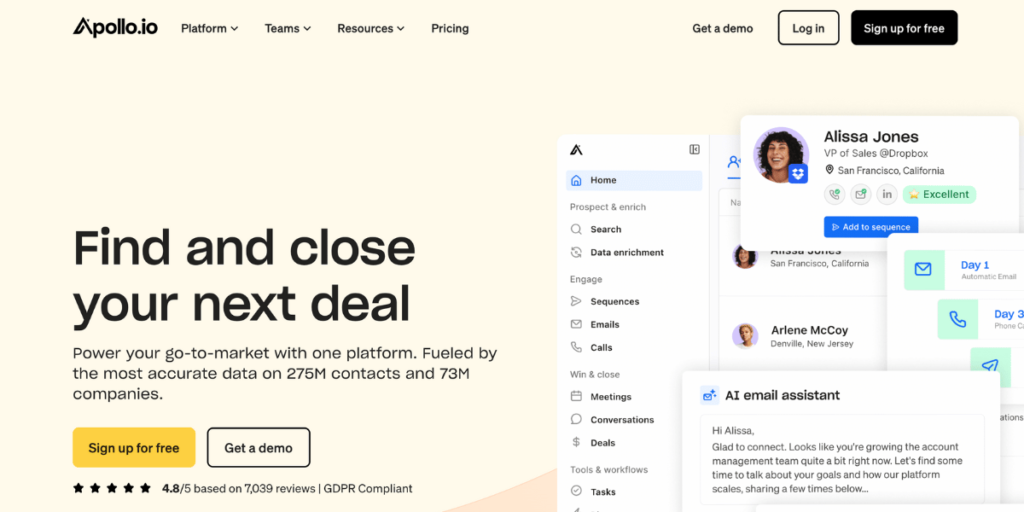
Apollo.io is a B2B sales intelligence platform that helps businesses discover potential customers, research companies, find professional contact information, and manage outbound prospecting.
Instead of searching multiple websites for potential clients, sales teams can use its database and filters to identify prospects according to industry, company size, location, job title, and other criteria.
Apollo also includes sales engagement features that help businesses organize email outreach and manage prospecting campaigns.
Key features:
- B2B Database: Discover companies and professional contacts.
- Advanced Filters: Identify prospects by industry, location, and job role.
- Email Sequences: Organize and automate prospect follow-ups.
- Contact Enrichment: Add available information to prospect records.
- CRM Integrations: Connect prospecting activities with sales workflows.
Pricing: Apollo offers a free plan with limited credits. Its Basic plan starts at $49 per user per month with annual billing. Professional and Organization plans offer additional capabilities at higher prices.
Our verdict: Apollo is particularly useful for small B2B agencies and service providers that need a repeatable outbound prospecting process. Businesses should verify contact information and follow applicable email marketing and privacy regulations before launching campaigns.
3. Hunter.io: Best for Email Finding and Verification
Best for: B2B prospecting, email outreach, and contact verification.
Starting price: Free plan; paid plans from $34/month.
Website: hunter.io
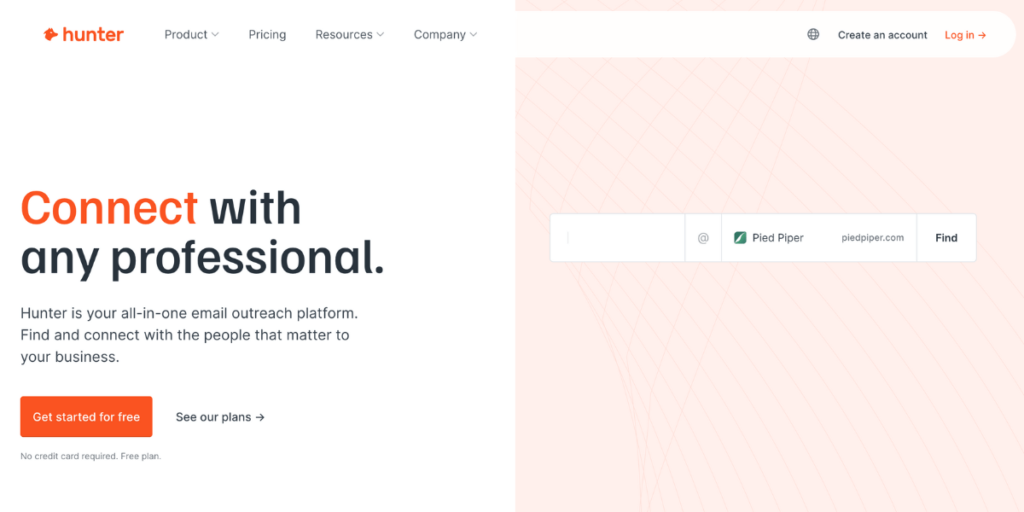
Hunter.io is an email discovery and verification platform that helps businesses find professional email addresses associated with company domains.
It is particularly useful for small businesses that already know which companies they want to approach but need to identify the right people to contact.
Its Domain Search feature can help discover publicly available professional email addresses associated with a company. The Email Finder helps locate an address using a person’s name and company domain.
Key features:
- Domain Search: Discover professional email addresses associated with domains.
- Email Finder: Find contact addresses using names and company information.
- Email Verification: Check email deliverability indicators.
- Bulk Tasks: Process multiple email searches and verifications.
- CSV Export: Export prospect information for further outreach.
Pricing: Hunter has a free plan and paid Starter, Growth, and Scale plans starting at $34, $104, and $209 per month, respectively, according to its published pricing.
Our verdict: Hunter is a useful option for businesses that rely on targeted email outreach, guest posting, partnerships, and B2B sales prospecting. It is more focused than a full CRM, so businesses will need another platform to manage their sales pipeline.
4. Snov.io: Best for Email Outreach Automation
Best for: Small sales teams and businesses running email prospecting campaigns.
Starting price: Limited free trial; paid Sales Suite plans from $39/month.
Website: snov.io
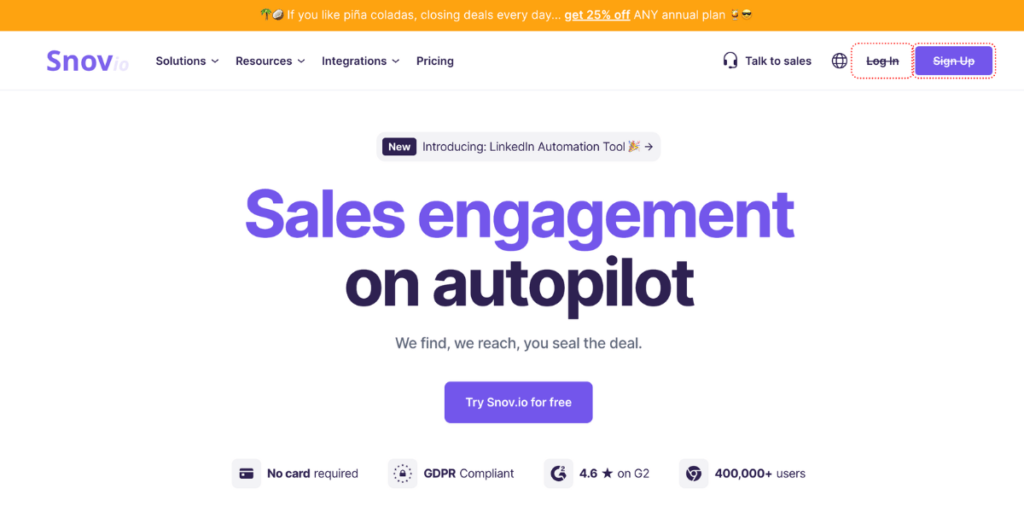
Snov.io combines email finding, verification, prospect management, and email outreach in one platform.
Small businesses can use it to discover potential customers, build prospect lists, verify email addresses, and organize automated email sequences.
The platform is particularly relevant for businesses that want to manage several prospecting activities without purchasing separate applications for every task.
Key features:
- Email Finder: Discover professional email addresses.
- Email Verifier: Check email addresses before outreach.
- Prospect Search: Build targeted prospect lists.
- Email Campaigns: Create and manage automated sequences.
- Email Warm-Up: Access tools designed to support sender reputation.
Pricing: Snov.io offers a limited free trial. Its paid Sales Suite Starter plan starts at $39 per month, with higher-volume Pro plans starting at $99 per month.
Our verdict: Snov.io is worth considering for small B2B companies that need email discovery and outreach in one place. Its credit and recipient limits should be reviewed before choosing a subscription.
5. OptinMonster: Best for Website Lead Capture
Best for: Bloggers, online businesses, and service companies with existing website traffic.
Starting price: Advertised introductory plans from $9/month with annual billing.
Website: optinmonster.com
Getting website visitors is only one part of lead generation. Businesses also need a way to convert those visitors into subscribers, inquiries, and potential customers.
OptinMonster focuses on website conversion and lead capture. It helps businesses create pop-ups, floating bars, slide-ins, and other opt-in campaigns to collect visitor information.
For instance, a marketing agency can display a free website audit offer to visitors reading its SEO services page. A software company can offer a downloadable guide in exchange for an email address.
Key features:
- Popup Builder: Create customizable lead capture popups.
- Exit-Intent Technology: Display campaigns when visitors show exit behavior.
- Page Targeting: Show relevant campaigns on selected pages.
- A/B Testing: Compare campaign variations.
- Marketing Integrations: Connect campaigns with supported email marketing services.
Pricing: OptinMonster advertises introductory annual pricing starting at $9 per month for Basic. Higher plans include additional targeting, testing, and integration features.
Our verdict: OptinMonster is suitable for businesses that already receive website visitors but need more opportunities to collect contact details. It is less useful as a standalone solution for companies without an established traffic source.
6. Brevo: Best for Email Marketing and Lead Nurturing
Best for: Small businesses building subscriber lists and nurturing leads.
Starting price: Free plan; paid Starter from $9/month.
Website: brevo.com
Brevo is an email and customer engagement platform that helps businesses communicate with prospects through email, SMS, and other supported channels.
It is particularly useful for businesses that want to maintain relationships with people who have already shown interest in their products or services.
For example, a home improvement company can send follow-up emails to homeowners who requested a quotation but have not yet booked a service.
Key features:
- Email Campaigns: Create and send marketing emails.
- Marketing Automation: Set up automated customer communication.
- Contact Management: Organize subscriber and customer information.
- SMS Marketing: Communicate through supported SMS campaigns.
- Campaign Analytics: Monitor email performance and engagement.
Pricing: Brevo offers a free plan with 300 email sends per day and storage for up to 100,000 contacts. Paid Starter plans begin at $9 per month.
Our verdict: Brevo is a practical option for small businesses that want to build an email list and nurture existing leads without investing in an expensive marketing automation platform.
7. LinkedIn Sales Navigator: Best for Finding Decision-Makers
Best for: B2B consultants, agencies, recruiters, and professional service providers.
Starting price: Core from $119.99/month.
Website: LinkedIn Sales Navigator
LinkedIn Sales Navigator is a prospecting solution designed to help sales professionals identify relevant companies and decision-makers.
Unlike general contact databases, it focuses on professional relationships and business information available through LinkedIn.
Businesses can search for prospects using filters such as job title, company size, industry, geography, and seniority.
Key features:
- Lead Search: Find professionals based on detailed criteria.
- Account Search: Identify relevant businesses and organizations.
- Lead Recommendations: Discover potential prospects.
- Sales Insights: Access relevant professional and company information.
- CRM Integrations: Connect supported sales workflows with CRM platforms.
Pricing: LinkedIn Sales Navigator Core starts at $119.99 per month per license. Advanced starts at $159.99 per month per license, with annual billing options available.
Our verdict: Sales Navigator is useful for businesses targeting specific decision-makers, particularly in industries where relationships and professional networking influence purchasing decisions. Its price makes it less suitable for businesses with very limited prospecting budgets.
8. Google Business Profile: Best for Local Lead Generation
Free
Best for: Local service businesses, contractors, restaurants, and professional services.
Starting price: Free.
Website: Google Business Profile
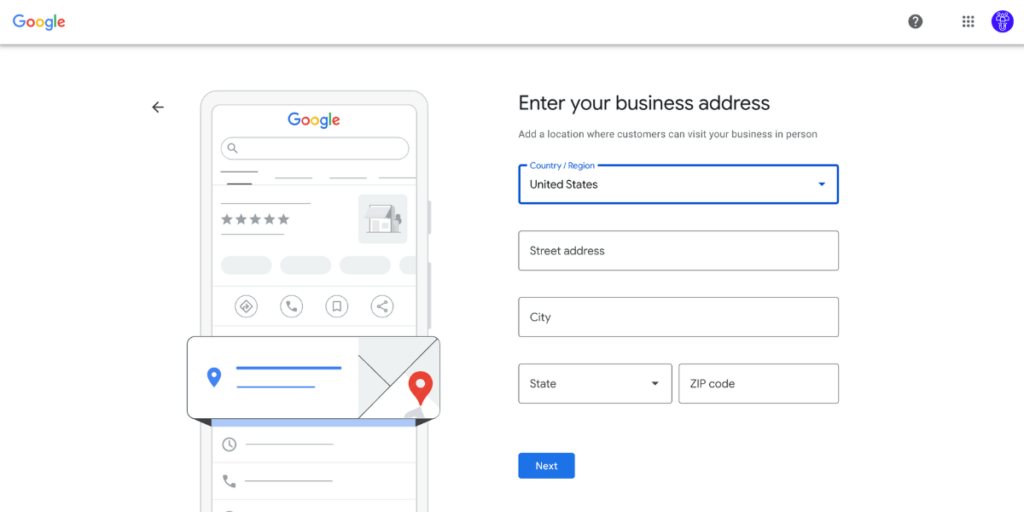
Google Business Profile is one of the most useful free lead generation resources for local businesses.
It allows eligible businesses to manage their presence across Google Search and Google Maps. Customers can discover business information, review available services, check operating hours, and interact with the business.
A roofing company, for instance, can use its profile to display service areas, photographs of completed projects, contact information, and customer reviews.
Key features:
- Local Visibility: Appear in relevant Google Search and Maps results.
- Business Information: Display operating hours, services, and contact details.
- Customer Reviews: Collect and respond to customer feedback.
- Business Updates: Publish relevant offers, news, and updates.
- Performance Insights: Review information about how customers discover the profile.
Pricing: Google Business Profile is free to create and manage for eligible businesses.
Google Business Profile Help+1
Our verdict: This should be a priority for local service providers targeting customers within specific cities or service areas. Combine it with local SEO, dedicated service pages, and a conversion-focused website to create a stronger inbound lead generation process.
9. Calendly: Best for Converting Leads Into Meetings
Best for: Consultants, agencies, freelancers, and service businesses.
Starting price: Free plan; Standard from $10 per seat/month with annual billing.
Website: calendly.com
Calendly is an appointment scheduling platform that helps businesses make it easier for prospects to book meetings.
Although it does not primarily generate new prospects, it plays an important role in converting existing inquiries into sales conversations.
For example, a digital marketing agency can add a Calendly booking link to its website, email campaigns, and sales proposals. Interested prospects can choose an available meeting time without exchanging multiple emails.
Key features:
- Booking Pages: Create personalized appointment scheduling pages.
- Calendar Integration: Connect supported calendar accounts.
- Automated Reminders: Send meeting reminders and notifications.
- Meeting Types: Create different appointment formats.
- CRM Integrations: Connect with supported sales and marketing applications.
Pricing: Calendly offers a free plan with one event type and one calendar connection. Its Standard plan starts at $10 per seat per month with annual billing.
Our verdict: Calendly is particularly useful for service businesses where a consultation, demonstration, or discovery call is part of the sales process. It works best alongside a website lead capture tool or CRM.
Lead Generation Tools Comparison: Features and Pricing
Choosing between multiple lead generation platforms can be difficult, particularly when each tool serves a different purpose. The following table summarizes their primary applications and entry-level pricing.
| Tool | Best use case | Starting price |
| HubSpot | CRM and inbound leads | Free |
| Apollo.io | B2B prospecting | Free |
| Hunter.io | Email finding | Free |
| Snov.io | Email outreach | $39/month |
| OptinMonster | Website lead capture | $9/month* |
| Brevo | Email marketing | Free |
| LinkedIn Sales Navigator | B2B decision-makers | $119.99/month |
| Google Business Profile | Local lead generation | Free |
| Calendly | Appointment scheduling | Free |
*OptinMonster’s advertised introductory price requires annual billing. Prices are in USD and may change. Paid pricing reflects published entry-level offers, not necessarily the full cost of using each platform.
How to Choose the Best Lead Generation Tools for Your Small Business?
The best lead generation software depends on how your business attracts customers and manages sales opportunities. Instead of subscribing to multiple platforms immediately, identify your biggest lead generation challenge first.
Consider these factors before purchasing:
1. Identify your lead generation channel
Determine whether your business needs inbound leads, outbound prospects, or both. Local service providers may benefit more from Google Business Profile and website lead capture, while B2B agencies may prioritize Apollo and Hunter.
2. Consider your marketing budget
Start with free plans or affordable subscriptions. HubSpot, Brevo, and Google Business Profile provide useful starting points without requiring an immediate financial commitment.
3. Check integrations
Your lead generation software should work with your existing website, email platform, CRM, and other business applications. Avoid purchasing tools that create disconnected customer records.
4. Evaluate lead quality
A large prospect list does not necessarily translate into more sales. Prioritize accurate contact information, relevant customer profiles, and genuine buying interest.
5. Measure business outcomes
Monitor qualified leads, booked appointments, response rates, sales opportunities, and customer acquisition costs. These metrics help determine whether a tool contributes to actual business growth.
Which Combination of Lead Generation Tools Works Best?
Small businesses rarely need all nine platforms. A focused combination is usually more practical.
| Business type | Recommended combination |
| Local service businesses | Google Business Profile + HubSpot + Calendly |
| B2B agencies | Apollo.io + Hunter.io + HubSpot |
| Consultants and freelancers | LinkedIn Sales Navigator + Calendly + HubSpot |
| Ecommerce businesses | OptinMonster + Brevo |
| Small sales teams | Apollo.io + Snov.io + HubSpot |
For example, a roofing contractor targeting homeowners in Dallas can use Google Business Profile and local SEO to attract potential customers, website forms to capture inquiries, and HubSpot to manage quotation requests and follow-ups.
A B2B marketing agency targeting businesses across the United States may use Apollo to identify companies, Hunter to find and verify professional email addresses, and HubSpot to track sales conversations.
Frequently Asked Questions
1. Which lead generation tool is best for B2B?
Apollo.io is a strong choice for B2B lead generation because it combines company and contact discovery, prospecting filters, and sales engagement features. Hunter.io and LinkedIn Sales Navigator are useful alternatives for email discovery and professional prospecting.
2. What are the best lead generation tools for small businesses?
Some of the best options include HubSpot, Apollo.io, Hunter.io, Snov.io, OptinMonster, Brevo, LinkedIn Sales Navigator, Google Business Profile, and Calendly. The right choice depends on your target audience, acquisition channel, and budget.
3. Are there free lead generation tools for small businesses?
Yes. HubSpot, Google Business Profile, Brevo, Apollo.io, Hunter.io, and Calendly offer free plans or free access to their core services. However, free versions have limitations on users, credits, features, or usage.
4. What is the difference between lead generation software and CRM software?
Lead generation software helps businesses discover and capture potential customers. CRM software focuses on organizing customer information, tracking interactions, and managing sales opportunities. Some platforms, including HubSpot and Apollo, combine both capabilities.
5. How can small businesses generate leads without spending money?
Small businesses can generate leads through organic search, Google Business Profile, social media, referrals, useful website content, and professional networking. Free CRM and email marketing plans can help organize and nurture the inquiries they receive.
Final Thoughts
The right lead generation tools can help small businesses find prospects, capture inquiries, and manage customer relationships without building a large sales department.
Our recommendation is to start with one primary acquisition channel and the software needed to manage it. Add more tools only when your existing process requires additional capabilities.
For local businesses, combining local SEO, Google Business Profile optimization, and website conversion improvements can create a consistent source of inbound inquiries.
At Leads Crawler, we help local businesses attract qualified prospects through local SEO, inbound lead generation, and digital marketing. If you’re looking to improve your customer acquisition process, get in touch with our team to discuss your growth opportunities.